

Are you wondering which SSC Exams After 12th you can apply for and which one may suit your career goals? The Staff Selection Commission conducts various recruitment examinations for different government posts. For students who have completed Class 12, understanding the available exams, eligibility, job profiles, and preparation requirements can help them make an informed choice.
SSC exams offer opportunities across different departments and job roles. Exams such as SSC CHSL and SSC Stenographer are among the options available to eligible 12th-pass candidates. However, the exact requirements can vary by examination and post, so candidates should always check the latest notification before applying.
SSC Exams After 12th: Where Should You Start?
The first step is to understand which SSC examinations accept 12th-level qualifications and what type of posts they offer. Candidates should compare the eligibility criteria, syllabus, exam pattern, job responsibilities, and selection process before choosing an examination.
If you are beginning SSC exams after 12th, having a clear target can help you select the right study material and create a focused preparation plan.
Which SSC Exams Are Available After 12th?
Candidates who have completed Class 12 can consider SSC examinations for which the required educational qualification is 12th standard. Some commonly known options include:
- SSC CHSL: The Combined Higher Secondary (10+2) Level examination is conducted for various Group C posts.
- SSC Stenographer: This examination provides opportunities for eligible candidates for Stenographer Grade C and Grade D posts.
- Other SSC Opportunities: Recruitment requirements can change, so candidates should check the latest SSC notifications for examinations and posts open to 12th-pass candidates.
Candidates from Science, Commerce, or Arts backgrounds should check the specific educational requirements of each post rather than assuming that all SSC examinations have the same eligibility criteria.
What Jobs Can You Get Through SSC Exams?
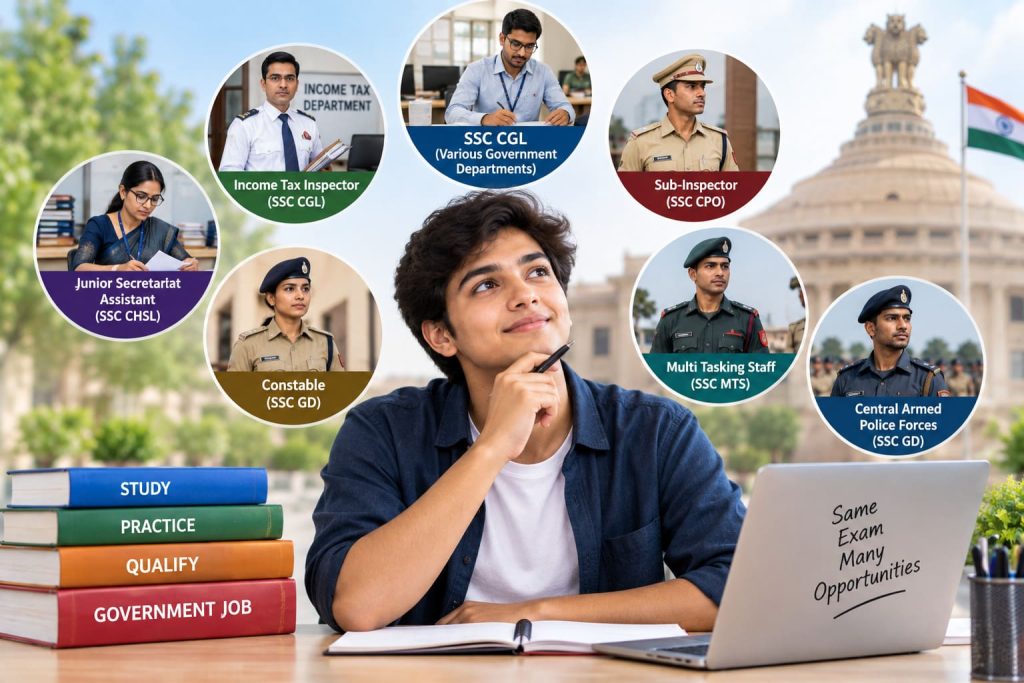
For students exploring SSC Exams After 12th, SSC recruitment examinations can offer different government job profiles, including clerical, data-entry, stenography, and other administrative roles.
The nature of work, department, pay level, skill requirements, and career progression can differ between posts. Candidates should therefore consider the job profile along with the examination when deciding to appear for SSC Exams after 12th to target.
SSC Exams After 12th: Eligibility Requirements
Eligibility requirements depend on the examination and the specific post. For several 12th-level SSC opportunities, candidates need to have passed Class 12 or an equivalent qualification from a recognised board.
The SSC exam after the 12th age limit also varies according to the recruitment. Age relaxations may apply to eligible categories as per the relevant rules. Candidates should check the latest official notification for the exact qualification, age limit, nationality, and other requirements before applying.
SSC Exam Syllabus and Pattern
The syllabus and exam pattern differ between SSC examinations. Candidates preparing for SSC Exams After 12th exams should carefully review the subjects, number of questions, marking scheme, duration, and selection stages mentioned in the latest notification.
Depending on the examination, preparation may include areas such as General Intelligence and Reasoning, Quantitative Aptitude, English Language, and General Awareness. Candidates should use the prescribed syllabus to organise their study schedule rather than preparing from unrelated topics.
How to Select the Right SSC Exam?
Choosing an SSC Exams after 12th depends on your qualification, interests, preferred job profile, and eligibility. Consider the following factors before making your choice:
- Educational Qualification: Check whether you meet the requirements for the target post.
- Job Profile: Understand the duties and responsibilities associated with the post.
- Skill Requirements: Some posts may require specific typing or stenography skills.
- Exam Pattern: Compare the subjects and selection stages.
- Career Preferences: Consider the type of government work you would like to pursue.
- Preparation Requirements: Choose an examination whose syllabus and requirements you can prepare for consistently.
Candidates should also remember that exams such as the SSC CGL examination require graduation, so they are generally not options immediately after Class 12.
SSC Preparation Strategy for 12th-Pass Students
Starting preparation early can help students build strong fundamentals and become familiar with the examination format. For effective SSC Exams After 12th preparation, begin with the syllabus and divide your study time among the relevant subjects.
A practical preparation strategy includes:
- Understand the Syllabus: Identify the subjects and important topics.
- Create a Timetable: Set realistic daily and weekly study targets.
- Strengthen Fundamentals: Build your concepts before moving to advanced questions.
- Practise Regularly: Solve topic-wise and mixed questions.
- Solve Previous-Year Papers: Use an SSC CHSL previous year question paper and other relevant papers to understand question patterns.
- Take Mock Tests: Regular mock test practice can improve speed and time management.
- Analyse Mistakes: Review incorrect answers and identify weak areas.
- Revise Consistently: Revise formulas, concepts, vocabulary, and important facts regularly.
Create a realistic timetable, practise questions regularly, solve previous-year papers, and take mock tests. Consistent revision and analysing mistakes can help improve speed, accuracy, and overall exam readiness.
Best Study Resources for SSC Preparation
Choosing reliable study resources can make preparation more organised. Candidates should select books, notes, practice sets, and online resources that match the latest syllabus and examination pattern.
SSC previous year papers, model question papers, revision notes, and mock tests can provide useful practice. Avoid collecting too many resources at once, as repeatedly switching between books and sources can make preparation less consistent.
Role of Mock Tests and Previous-Year Papers
Previous-year papers help candidates understand the types of questions asked and identify frequently tested topics. Solving an SSC question paper under a time limit can also provide useful practice for managing the examination duration.
Mock tests provide another way to assess preparation. Candidates can use an SSC CGL mock test or SSC GD mock test when preparing for those respective examinations, while 12th-level aspirants should choose mocks designed specifically for their target exam.
After every test, analyse incorrect and unanswered questions. This can help identify conceptual gaps, calculation mistakes, time-management issues, and topics requiring additional practice.
Common SSC Preparation Mistakes
Avoiding common mistakes can make SSC Exams After 12th preparation more organised and effective.
- Starting Without Understanding the Exam: Check the latest notification, syllabus, and exam pattern first.
- Ignoring Previous-Year Papers: Practise relevant previous-year papers regularly.
- Using Too Many Resources: Select reliable books and study material and follow them consistently.
- Skipping Mock Tests: Include regular tests to assess speed and accuracy.
- Neglecting Revision: Revise important concepts, formulas, vocabulary, and facts.
- Focusing Only on Strong Subjects: Give sufficient time to weaker areas as well.
- Ignoring Time Management: Practise questions within a fixed time to improve your exam approach.
Avoiding these mistakes can help students stay consistent, manage their time effectively, and improve their overall SSC Exams After 12th preparation.
About Career Planner – Leader in Bank Exams Prepration
Career Planner has been helping students prepare for competitive examinations since 2008, including SSC, Banking, Railway, Defence, CLAT, MBA, and other competitive exams. For students beginning their SSC Exams After 12th preparation, structured guidance can help strengthen key subjects and understand examination requirements.
Career Planner focuses on organised learning, study resources, regular practice, mock tests, doubt-clearing sessions, workshops, and guidance. This approach helps aspirants maintain consistency, practise effectively, and develop better exam-taking skills.
Why Choose Career Planner for Your SSC Exam Prepration
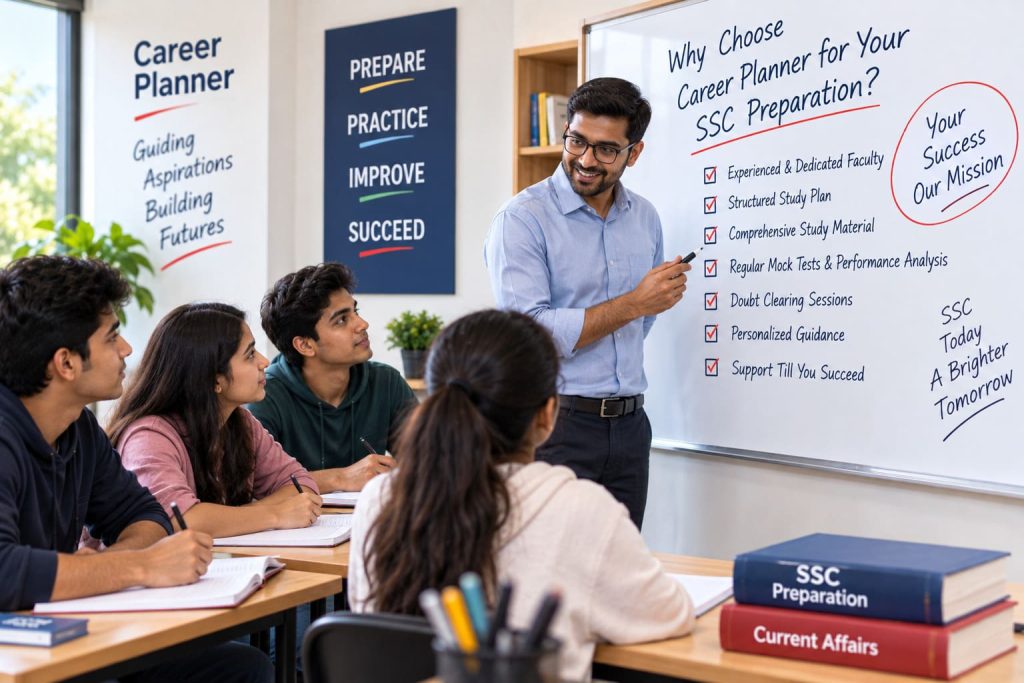
Choosing the right SSC preparation support can make your study routine more organised and focused. Career Planner provides a structured learning environment, relevant study resources, regular practice, mock tests, and academic guidance to help aspirants prepare systematically.
- Structured Learning: A planned approach helps students cover the syllabus step by step and maintain a consistent study routine.
- Experienced Guidance: Faculty support can help students understand difficult concepts, clear doubts, and improve their approach to different question types.
- Regular Practice: Consistent question-solving helps strengthen concepts while improving speed and accuracy.
- Mock Tests: Regular tests provide exam-like practice and help students assess their preparation, manage time, and identify areas for improvement.
- Doubt-Clearing Support: Students can discuss difficult questions and concepts with faculty instead of leaving gaps in their preparation.
- Revision Support: Regular revision helps students retain important formulas, concepts, vocabulary, and other topics covered during preparation.
- Focused Learning Environment: Studying alongside other aspirants can encourage discipline, regular practice, and consistency.
With regular practice and appropriate guidance, students can identify their weak areas, strengthen important concepts, and improve their exam-taking skills. Career Planner’s structured approach can help aspirants stay consistent and work steadily toward their SSC preparation goals.
Prepare for Your SSC Exam with Career Planner
Starting your SSC journey after Class 12 becomes easier when you have a clear understanding of the available examinations, eligibility requirements, syllabus, and job profiles. Identify your target exam, create a realistic study plan, practise previous-year papers, and take regular mock tests.
Career Planner provides structured competitive-exam preparation and guidance for students who want to build a consistent preparation routine and work toward their government career goals.
Contact Information
Career Planner
Address: CP House, Atal Path, off Boring Road, Shivpuri, Patna, Bihar 800023
Phone: 9386347918
Email: careerplannerindia@gmail.com
Conclusion
Choosing among SSC Exams After 12th requires an understanding of the available examinations, eligibility criteria, job profiles, syllabus, and selection process. Candidates should compare these factors with their qualifications, interests, and career goals before selecting an examination.
Consistent SSC exam preparation, reliable study resources, previous-year papers, mock tests, and regular revision can help candidates prepare more effectively. Always check the latest notification on the official website of SSC for accurate and updated recruitment information.


