

Preparing for a competitive exam can feel stressful when only 30 days remain. You may have several topics to revise, mock tests to attempt and weak areas to improve. The key is to follow a clear revision plan instead of trying to study everything again from the beginning. A focused approach to the SSC Syllabus can help you improve accuracy, manage time and enter the exam with greater confidence.
Whether you’re preparing for SSC CGL, CHSL or GD, focus on revision, mock tests and weak areas in the final 30 days. Understanding the SSC complete syllabus and exam pattern will help you revise effectively and improve your performance.
Quick Answer: How to Revise the SSC Syllabus in 30 Days?
To revise the SSC Syllabus in the final 30 days, divide your preparation into three phases: revise concepts and weak topics during Days 1–10, practise previous-year questions and sectional tests during Days 11–20 and take full-length mock tests with focused revision during Days 21–30. Follow the official syllabus, analyse mistakes and revise short notes daily.
Key Takeaways
- Divide the SSC full syllabus into manageable weekly targets.
- Prioritize weak topics and frequently tested concepts.
- Revise reasoning, mathematics, English and general awareness regularly.
- Practice previous-year questions based on your target examination.
- Take mock tests and analyse every incorrect answer.
- Follow the correct SSC pattern and marking scheme.
- Maintain a consistent routine, adequate sleep and a calm mindset.
1. Understand the SSC Syllabus Before Starting Revision
Before making a timetable, review the SSC Syllabus for your specific examination. The syllabus for SSC CGL, CHSL and GD differs in certain subjects, difficulty levels and selection stages. Studying the wrong topics can waste valuable revision time.
Check the SSC CGL Complete Syllabus
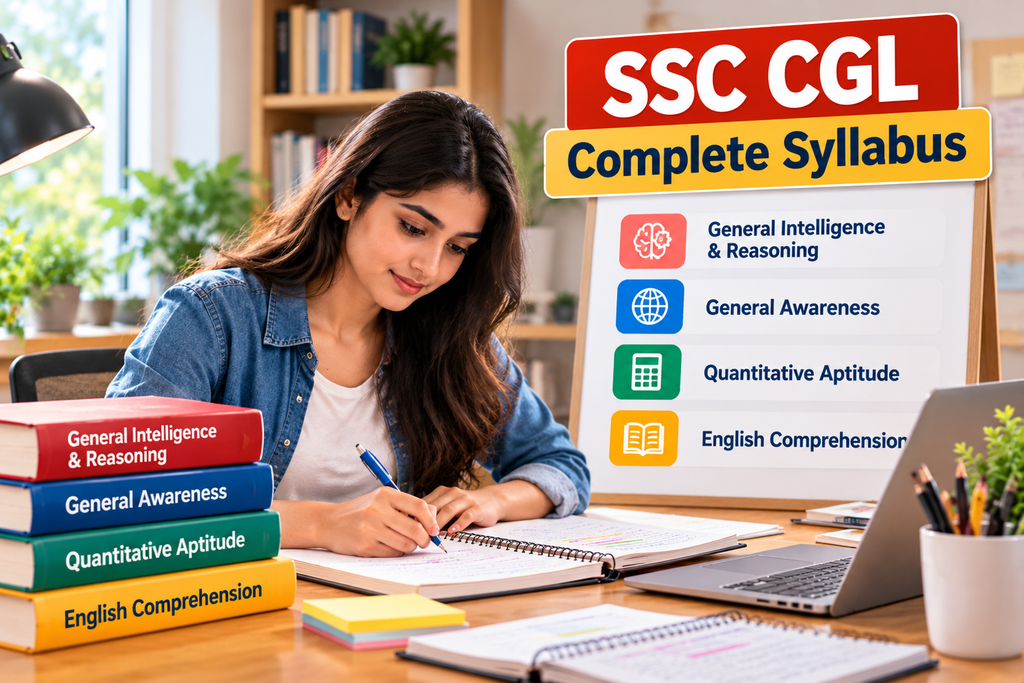
Candidates preparing for graduate-level posts should review the SSC CGL complete syllabus and identify the subjects and modules relevant to their examination.
For SSC CGL, the main Tier-I subjects are:
- General Intelligence and Reasoning
- General Awareness
- Quantitative Aptitude
- English Comprehension
The SSC CGL exam syllabus for Tier-II includes additional modules and papers, depending on the applicable examination scheme and post. These may include Computer Knowledge, Data Entry Speed Test, Statistics or Finance and Economics.
Review the SSC GD and CHSL Syllabus
SSC CHSL covers reasoning, maths, English and general awareness, along with applicable skill tests. Follow the exam pattern of SSC CHSL for effective preparation.
The SSC GD GK syllabus includes current affairs, history, geography, polity and science, alongside reasoning, maths and English or Hindi. Check the latest syllabus at SSC Official Website
2. Follow a 30-Day SSC Revision Plan
A structured timetable makes the SSC Syllabus easier to revise and helps prevent last-minute confusion. Divide the final month into three phases, with each phase having a specific goal.
| Days | Revision focus | Main target |
| Days 1–10 | Concept revision | Review core topics and weak areas |
| Days 11–20 | Practice and accuracy | Solve previous-year questions and sectional tests |
| Days 21–25 | Mock test practice | Attempt full-length tests and analyse performance |
| Days 26–30 | Final revision | Review notes, formulas, mistakes and exam strategy |
Days 1–10: Revise Core Concepts
Use the first 10 days to revise key topics from the SSC complete syllabus, including maths, reasoning, English and general awareness. Focus on formulas, grammar, current affairs and important concepts you have already studied. Note your weak areas and revise them regularly.
Days 11–20: Practise Questions and Improve Accuracy
During Days 11–20, practise previous-year papers and sectional tests based on the SSC CGL exam syllabus. Set time limits, analyse mistakes and revise weak topics to improve accuracy, speed and overall performance in the SSC portion.
Days 21–25: Attempt Full-Length Mock Tests
During Days 21–25, attempt mock tests following the exam pattern of SSC. Analyse your scores, accuracy, time management and mistakes to identify weak areas and improve performance.
Days 26–30: Revise and Stay Consistent
The final five days should focus on consolidation. Review formulas, grammar rules, short notes, vocabulary, general awareness facts and questions you previously answered incorrectly.
Avoid making major changes to your study routine. Do not spend hours on unfamiliar topics unless they are essential and manageable. Your goal is to strengthen existing knowledge of the SSC Syllabus, not to create a new study plan at the last moment.
3. Prioritize Important Subjects in the SSC Syllabus
A balanced subject-wise routine helps you retain information and maintain progress across all sections.
Quantitative Aptitude
Revise formulas and practise calculations daily. Focus on percentages, ratio and proportion, averages, profit and loss, interest, time and work, speed and distance, geometry and mensuration according to your exam.
Keep a formula notebook and solve timed questions to improve speed without sacrificing accuracy.
Reasoning
The SSC reasoning syllabus often includes coding-decoding, analogy, classification, series, blood relations, direction sense and logical reasoning. Practise mixed question sets to improve your ability to identify patterns quickly.
Review questions you answered incorrectly and learn the reasoning behind each correct answer instead of memorizing solutions.
English Language
For the English section, revise grammar, vocabulary, synonyms, antonyms, idioms, error spotting, sentence improvement and reading comprehension as relevant to your examination.
Spend time reviewing recurring errors and practise short question sets daily. Regular revision is more effective than trying to memorize a large vocabulary list in one sitting.
General Awareness and GK
Revise static general knowledge and important current affairs through concise notes and practice questions. For the SSC GD GK syllabus, give particular attention to history, geography, Indian polity, science, sports, awards and other relevant general knowledge topics.
Avoid relying on unverified facts. Use reliable study material and review information that you have already covered.
4. Understand the SSC CGL Exam Pattern and Marking Scheme
Knowing the SSC CGL exam pattern helps you decide how much time to allocate to each subject and how to approach questions during practice.
Review the number of questions, marks, duration, negative marking and sectional requirements specified in the relevant notification. The SSC CGL syllabus 2026 and its examination scheme should be checked against the official notice rather than older preparation guides.
The same principle applies to the exam pattern of SSC CHSL and other SSC examinations. Do not assume that all examinations use the same marking scheme, timing or selection stages.
During mock tests, practise skipping difficult questions and returning to them when time permits. Avoid random guessing when negative marking applies. Use your performance data to decide which question types deserve more practice.
5. Common Mistakes to Avoid During the Final 30 Days
Several mistakes can reduce the value of your revision, even if you have studied most of the SSC full syllabus.
- Starting too many new topics instead of revising completed chapters.
- Taking mock tests without reviewing incorrect answers.
- Ignoring general awareness until the last few days.
- Spending too much time on one difficult question.
- Using multiple books and resources for the same topic.
- Ignoring sleep, breaks and regular meals.
- Following an outdated SSC pattern instead of the latest official notification.
Keep your resources limited and your daily goals realistic. A simple revision system that you follow consistently is better than an ambitious timetable that you cannot maintain.
6. How Career Planner India Can Support Your SSC Preparation
Preparing for a government examination requires more than completing the SSC Syllabus. Aspirants also need regular practice, feedback and guidance to improve weak areas.
Career Planner India offers competitive exam preparation support, including experienced faculty, study materials, doubt-clearing sessions and test series.
Candidates in Patna and across Bihar can explore available courses and choose a preparation strategy that matches their target examination and current level.
Conclusion
The final 30 days can make your preparation more focused if you use them wisely. Review the SSC Syllabus, follow a realistic timetable, practise previous-year questions and analyse mock tests to identify areas for improvement.
Whether you are preparing for CGL, CHSL or GD, consistency and accuracy matter more than studying without a clear plan. Check the latest official notification, revise your short notes regularly and protect your sleep during the final week.
For additional guidance, explore the preparation resources offered by Career Planner India and choose a study approach that supports your goals. A focused revision plan can help you enter the examination with better preparation and confidence.
Frequently Asked Questions About SSC Syllabus
1. How can I revise the SSC Syllabus in 30 days?
Divide the SSC Syllabus into three phases: concept revision, question practice and final revision. Attempt mock tests regularly, analyse mistakes and focus on weak topics instead of restarting the entire syllabus.
2. What is included in the SSC complete syllabus?
The SSC complete syllabus depends on the examination. Common subjects include reasoning, quantitative aptitude, English and general awareness. Some examinations also include computer knowledge, statistics, finance, skill tests or physical tests.
3. What is the SSC CGL syllabus for 2026?
The SSC CGL syllabus 2026 covers General Intelligence and Reasoning, General Awareness, Quantitative Aptitude and English Comprehension in Tier-I. Tier-II includes additional modules and papers depending on the examination scheme and relevant post.
4. Is the SSC reasoning syllabus the same for CGL, CHSL and GD?
The SSC reasoning syllabus shares topics such as analogy, series, classification and coding-decoding across several examinations. However, the question level, topic distribution and examination requirements may differ.
5. What topics are covered in the SSC GD GK syllabus?
The SSC GD GK syllabus covers general knowledge and awareness, including history, geography, polity, science and current affairs. Candidates should follow the latest official notification and practise questions relevant to the examination.
6. What is the exam pattern of SSC CHSL?
The exam pattern of SSC CHSL includes a computer-based examination structure and applicable typing or skill-test requirements. Candidates should check the current notification for the exact sections, marks, timing and qualifying rules.


